Roofing
Emergency Roof Tarping in New Jersey
An exposed New Jersey roof needs a safe plan, not a risky climb.
- No-cost request
- Matched by ZIP code
- Statewide New Jersey
01
Get clear of immediate hazards
An exposed New Jersey roof needs a safe plan, not a risky climb. NJ Roof Pros is a free homeowner referral service from SoleSource Pros, not a roofing contractor. Each request is matched with ONE independent, licensed and insured roofer near the homeowner; the request is never sold to multiple companies. Availability and safe access determine what the roofer can do. For immediate danger, contact emergency services.
Leave rooms with sagging ceilings or water around electrical equipment. Keep people away from fallen branches and loose roof edges. A tarp cannot stabilize damaged framing.
If wires are down or the structure appears unsafe, contact the appropriate utility or emergency service. Do not wait for a referral to address danger to occupants.
02
Send only safe observations
Describe the opening, active leakage, and any blocked driveway or passage from a safe position. Ground-level pictures are enough to begin a conversation; do not use a ladder.
Tell the roofer whether the home is occupied and which areas cannot be entered safely. Do not explore an attic with uncertain footing to measure the damage.
03
Expect weather to control access
New Jersey nor’easters and tropical storm remnants can keep roof access unsafe. Shore winds in Ocean, Monmouth, and Atlantic counties may prevent secure temporary work while conditions persist.
Northern New Jersey snow and ice can conceal weak spots. Do not clear a damaged roof yourself. A submitted request is not a dispatch confirmation or an arrival-time promise.
Ready for a roofing estimate?
One short request, matched to a participating contractor who serves your area.
04
Clarify what the cover protects
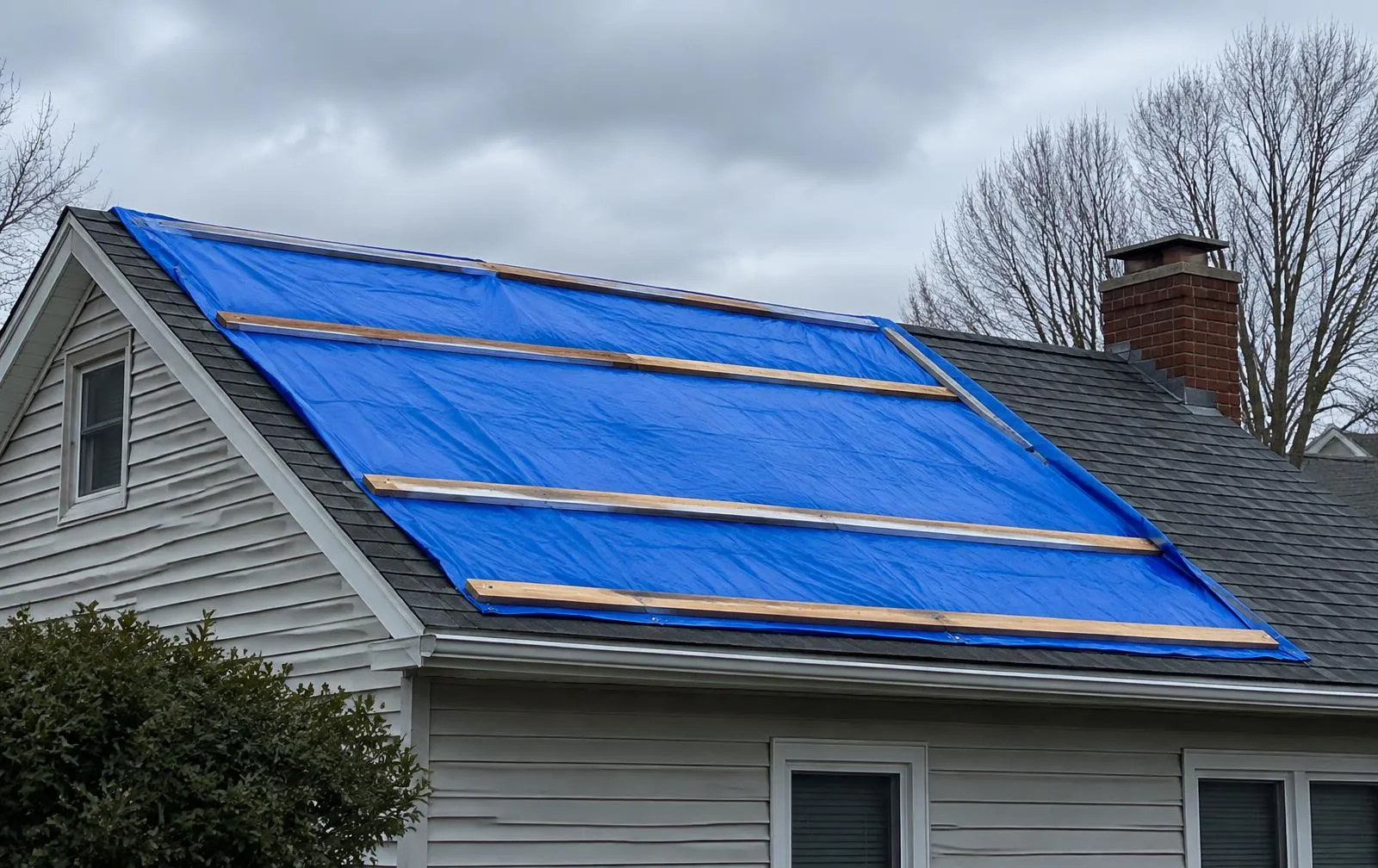
Ask which opening the temporary measure addresses and where runoff will go. On Shore additions or urban rowhomes, parapets and drains can make a simple covering unsuitable.
The roofer must select attachment methods for the roof’s condition. Temporary protection may reduce water entry, but it cannot guarantee a dry interior or replace permanent restoration.
05
Confirm paperwork despite the urgency
Ask for the contractor’s New Jersey Division of Consumer Affairs registration number. New Jersey home improvement contractors must register, and the number should appear on advertisements and contracts; request insurance information as well.
Check permit questions locally with your town’s construction office, including the later repair. Obtain a written temporary-work scope and keep photos and receipts without assuming your insurer will reimburse them.
06
Arrange the next step now
Ask how to report renewed leakage or a shifted cover, and arrange evaluation for permanent repairs. No universal time limit makes every tarp safe to leave unattended.
Observe only from below and never climb to adjust the covering. Discuss removal, follow-up charges, and the repair plan directly with the independent roofer before treating the emergency work as complete.
Questions
Frequently asked questions
Go deeper
Related roofing services
Storm Damage Roof Repair
Navigate New Jersey storm roof damage with safe documentation, temporary-protection questions, and an independent roofer referral.
Learn moreRoof Repair
Find a practical path for New Jersey roof leaks, damaged shingles, and flashing failures without assuming the entire roof needs replacement.
Learn moreRoof Replacement
Plan a New Jersey roof replacement around your home’s age, coastal exposure, attic conditions, and a clearly defined installation scope.
Learn more
Explore
More to explore
Get started
Ready to get your project started?
One independent New Jersey roofer will contact you. Your request is never sold to multiple companies.